What the responses show
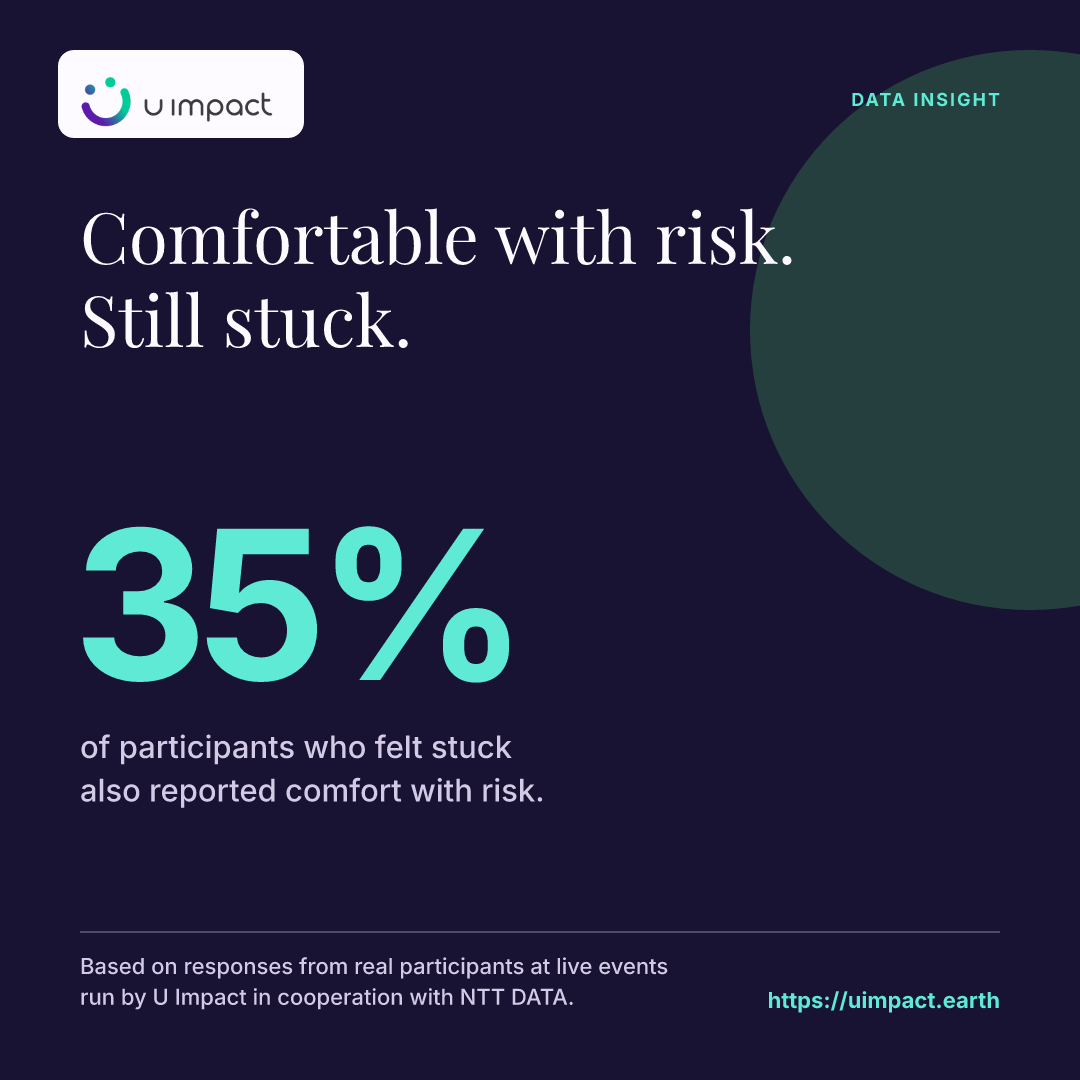
In our combined Mirai analysis, 35% of participants who reported feeling stuck also reported being comfortable with risk.
Based on responses from real participants at live events run by U Impact in cooperation with NTT DATA.
Those answers can coexist. Comfort with investment risk does not answer every question about understanding, confidence, priorities or the difficulty of choosing.
This does not establish why these participants felt stuck. It shows why a single signal is an incomplete starting point for designing support.
Keep the direction of the comparison clear
This finding starts with participants who felt stuck and asks how they described their comfort with risk. It does not say what share of all risk-comfortable participants felt stuck. Keeping the direction clear matters when translating an aggregate pattern into a product question.
For an advice-experience or product team, the useful implication is to examine the decision in context. Understanding, priorities and the way choices are presented may all be worth exploring. The finding does not identify which explanation applies to a customer or establish that a risk assessment is wrong.
Questions for your team
- Which group is the percentage describing?
- What other information would help interpret the hesitation?
- What would you ask the customer before proposing support?
Evidence and interpretation
Based on responses from real participants at live events run by U Impact in cooperation with NTT DATA.
The percentage describes participants who reported feeling stuck and answered the risk-comfort question. It is the share of that group reporting comfort with risk, not the share of risk-comfortable participants who felt stuck.
This analysis uses the combined completed responses in the Mirai app, reviewed on 30 September 2026. Percentages are rounded and use the relevant answered questions; responses without the required answers are excluded from that comparison. These are self-reports from an event audience, not a representative population estimate, observed investment transactions or evidence of cause and effect.
Read more about our methodology and risk tolerance and ambiguity tolerance.
Put the question to work
For wealth product and advice-experience teams, U Impact combines assessment signals to investigate a specific decision. Bring us the customer group and the point of hesitation you want to understand.