What the responses show
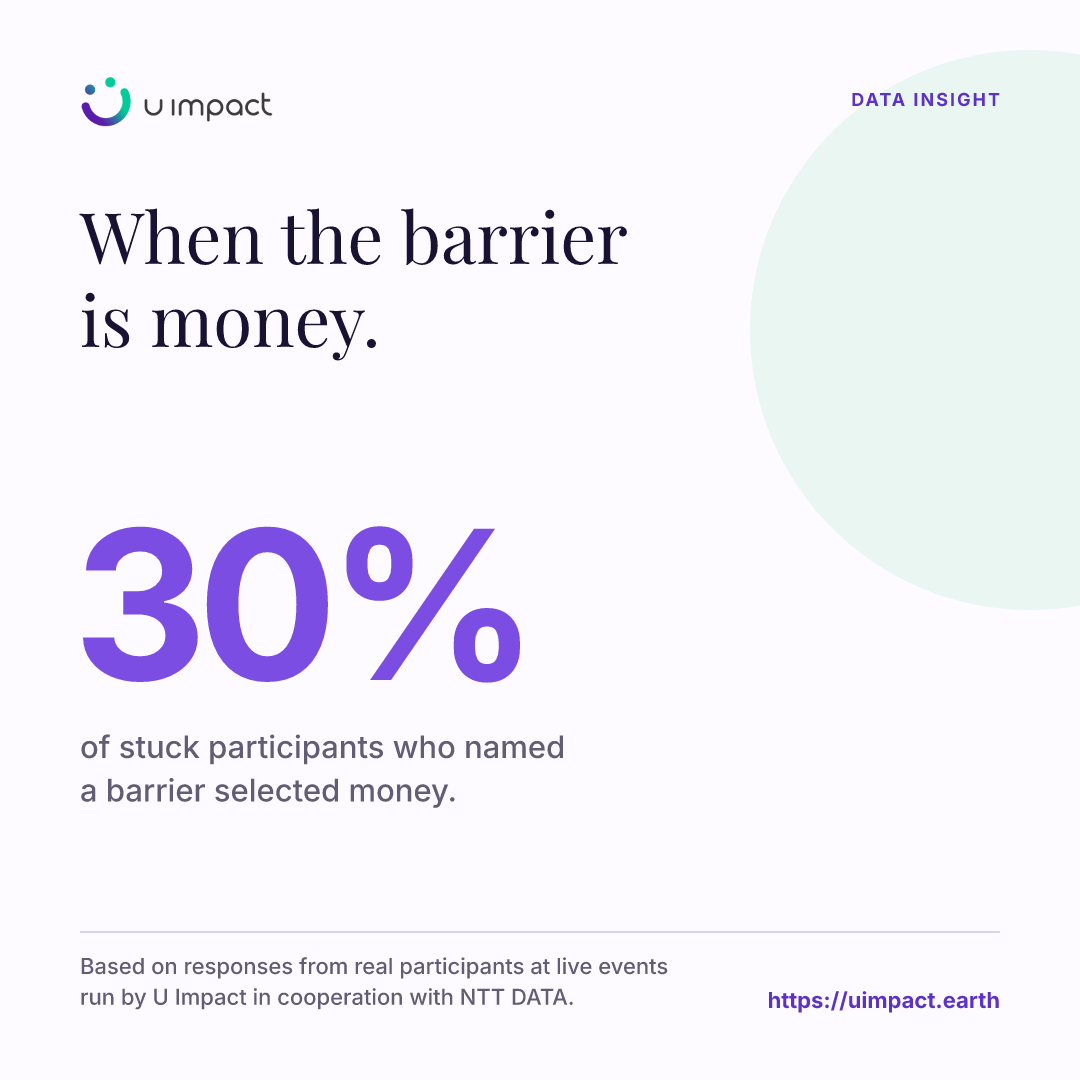
Among participants who felt stuck and named a barrier in our combined Mirai analysis, 30% selected money.
Based on responses from real participants at live events run by U Impact in cooperation with NTT DATA.
That answer is not a measure of their income or wealth. It tells us how they described the obstacle. We should explore what it means before proposing a response.
For financial-wellbeing programme leads, this is a reason to make room for questions about priorities and readiness, alongside questions about investment knowledge.
Ask what the barrier means before responding
Selecting money as an obstacle can open a conversation about readiness and competing priorities. It does not provide an income measure or establish what somebody can afford. Avoid turning the answer into a claim about the financial circumstances of the audience.
An organiser can prepare questions that acknowledge these distinctions without asking participants to disclose personal details publicly. Explore what people would like to understand next, then consider whether the event’s planned information and follow-up address that need. The aggregate result helps frame the conversation; the audience still needs room to explain itself.
Questions for your team
- How are participants interpreting the barrier label?
- Does the proposed session address the question they want to explore?
- Can the discussion remain useful without personal financial disclosure?
Evidence and interpretation
Based on responses from real participants at live events run by U Impact in cooperation with NTT DATA.
The percentage describes participants who both reported feeling stuck and named a barrier. It is not the share of all participants selecting money, and it is not a measure of income, wealth or affordability.
This analysis uses the combined completed responses in the Mirai app, reviewed on 30 September 2026. Percentages are rounded and use the relevant answered questions; responses without the required answers are excluded from that comparison. These are self-reports from an event audience, not a representative population estimate, observed investment transactions or evidence of cause and effect.
Read more about our methodology and financial investment behaviour: the field guide.
Put the question to work
U Impact live activations help participants reflect privately while organisers explore aggregate patterns with the room. Planning a client or employee programme? Share the audience and the conversation you want to make possible.